
Table of Contents
- The SME Challenge in Nigeria
- Why Accurate Weighing Matters for SMEs
- Case Study 1: Adeola’s Bakery – From Loss to ₦18M Profit Surge
- Case Study 2: ChukwuMart Distribution – Ending Customer Disputes
- Case Study 3: FreshFarm Agro – Transforming Agricultural Trading
- Case Study 4: PureWater Production – Quality Control Success
- Hidden Costs of Inaccurate Weighing
- ROI: How Fast SMEs Recover Investment
- Choosing the Right Weighing Solution for Your SME
- Mechatronix Group: Empowering Nigerian SME
The SME Challenge in Nigeria
Nigerian SMEs contribute 48% to the country’s GDP and account for over 50% of industrial employment, yet face severe operational challenges. Research shows that over 50% of SMEs fail in their first year of operation, and more than 95% fail during their first five years.
Among the pressing problems facing Nigerian SMEs, obtaining finance, finding customers, and infrastructure deficits are the most critical. However, there’s another silent killer that drains SME profits daily: inaccurate measurement and inventory management.
Many Nigerian SME owners operate without realizing they’re losing 5-15% of their revenue through measurement errors, material waste, customer disputes over quantities, and theft due to poor inventory tracking.
The Reality on the Ground
Walk into most Nigerian SME warehouses, production facilities, or retail operations, and you’ll find owners estimating weights by hand, using damaged or uncalibrated scales, guessing ingredient quantities, or relying on visual assessment for bulk materials.
These practices seem minor until you calculate the cumulative losses. For a business handling ₦5 million in monthly materials, a 5% measurement error translates to ₦250,000 in monthly losses—₦3 million annually. That’s often the difference between business survival and failure.
Why Accurate Weighing solutions Matters for SMEs
Weighing solutions address multiple critical pain points that Nigerian SMEs face daily:
1. Material Cost Control
Raw materials typically represent 40-70% of SME operational costs. When you cannot accurately measure these materials, you either overuse them (reducing profit margins) or underuse them (compromising product quality). Both scenarios hurt your business.
2. Customer Trust and Retention
Over 40% of small businesses fail due to no market demand for their products or services. However, many that have market demand still fail because they lose customer trust. When customers suspect they’re not getting accurate quantities, they switch to competitors—even at higher prices.
3. Regulatory Compliance
NAFDAC, SON, and other regulatory bodies require accurate weight declarations. Non-compliance leads to product seizures, fines, and business closures. Many SMEs have lost their operating licenses over measurement violations.
4. Operational Efficiency
Manual estimation wastes time. Staff spend hours reconciling inventory discrepancies, resolving customer complaints, and dealing with supplier disputes. Professional weighing systems eliminate these productivity drains.
5. Data for Growth
Without accurate weight data, SME owners make decisions based on guesswork. How much raw material should you order? What’s your actual production efficiency? Where are you losing money? Weighing solutions provide the data needed for intelligent business decisions.
Case Study 1: Adeola’s Bakery – From Loss to ₦18M Profit Surge
Background
Adeola Okonkwo owns a medium-sized bakery in Surulere, Lagos, producing bread, cakes, and pastries for local supermarkets and individual customers. By 2022, her business was generating ₦8 million monthly but struggling with profitability. Despite healthy revenue, her profit margins remained stubbornly low at 8-12%, far below the industry standard of 20-25%.
The Problem
Adeola’s production team used basic kitchen scales that were frequently inaccurate. Staff measured ingredients “by eye” for large batches, assuming consistency. The results were devastating:
- Ingredient Overuse: Flour consumption was 15% higher than recipes specified, costing an extra ₦360,000 monthly
- Batch Inconsistency: Some bread loaves were underweight, triggering customer returns and NAFDAC warnings
- Wastage: Poor measurement led to failed batches—approximately 8% of production ended up discarded
- Staff Disputes: Team members blamed each other for measurement errors, creating workplace tension
The Solution
In March 2023, Adeola invested ₦780,000 in industrial weighing solutions from Mechatronix Group:
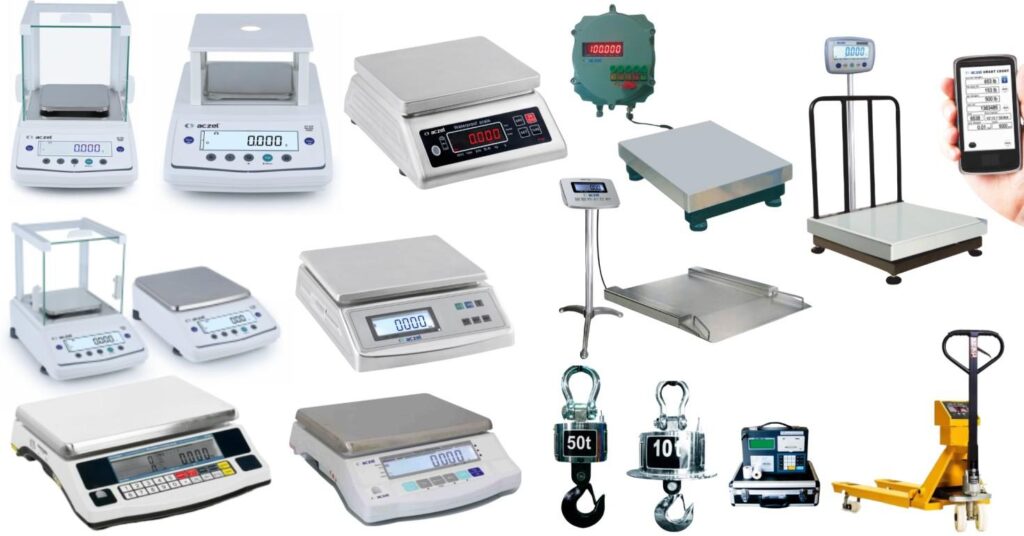
- Three precision bench scales (±1g accuracy) for ingredient measurement
- One platform scale (150kg capacity) for bulk flour and sugar
- Digital indicators with memory functions to record standard recipes
The installation took two days, including comprehensive staff training on proper weighing procedures and recipe standardization.
The Results (6 Months After Implementation)
The transformation was remarkable:
Financial Impact
- Flour costs decreased by ₦432,000 monthly (12% reduction)
- Sugar and other ingredient costs fell by ₦218,000 monthly
- Waste reduced from 8% to 1.5%, saving ₦240,000 monthly
- Total monthly savings: ₦890,000
- ROI achieved in just 0.9 months (27 days)
Operational Improvements
- Batch consistency reached 99.2%—every loaf now met weight specifications
- Customer complaints dropped by 87%
- NAFDAC compliance achieved with documented weight records
- Production time decreased by 18% as staff no longer had to remake failed batches
- Staff morale improved dramatically with clear, objective measurements
Business Growth
- Profit margins increased from 10% to 21%
- Annual profit increased by ₦18.4 million
- Supermarket contracts expanded from 12 to 23 outlets as reputation for consistency grew
- Adeola hired 4 additional staff to handle increased orders
Case Study 2: ChukwuMart Distribution – Ending Customer Disputes
Background
ChukwuMart Distribution operates a wholesale business in Onitsha, Anambra State, supplying rice, beans, garri, and other staples to retailers across the Southeast. Founded by Chukwu Emeka in 2018, the business grew to ₦15 million in monthly revenue by 2023.
The Problem
ChukwuMart’s biggest challenge wasn’t competition or financing—it was customer disputes. Retailers constantly complained about short weights. Some claimed a “50kg bag” actually weighed 48kg or 47kg. Others accused ChukwuMart of mixing heavy sand with products.
The disputes created several problems:
- Customer Churn: 25-30% of customers didn’t return for repeat orders
- Payment Delays: Retailers withheld payment pending weight verification
- Reputation Damage: Word spread that ChukwuMart couldn’t be trusted
- Time Waste: Emeka spent 15-20 hours weekly resolving disputes instead of growing the business
- Legal Threats: Two customers threatened legal action over alleged fraud
Emeka used an old mechanical scale inherited from the previous warehouse tenant. The scale’s accuracy was questionable, and there was no documentation of weights at the point of sale.
The Solution
In June 2023, Mechatronix Group installed a complete weighing system:
- Heavy-duty platform scale (1000kg capacity) with IP68 waterproof rating
- Digital indicator with printer for weight tickets
- Automated record-keeping software
- CCTV camera positioned to capture the weighing process
Investment: ₦1.2 million
The Process Change
ChukwuMart implemented a new procedure:
- Every order is weighed on the platform scale in the customer’s presence
- A printed weight ticket is generated showing date, time, product, and exact weight
- Both ChukwuMart and the customer sign the weight ticket
- A copy goes to the customer; another is filed with the invoice
- Video footage is retained for 30 days for dispute resolution
The Results (9 Months After Implementation)
Customer Relations
- Weight disputes dropped from 15-20 per week to zero
- Customer retention increased from 70% to 94%
- Payment collection time reduced by 65%—retailers now pay immediately as weights are verified
- Referrals increased by 120% as customers spread word about transparent weighing
Business Growth
- Monthly revenue grew from ₦15 million to ₦28 million
- Customer base expanded from 85 to 167 active accounts
- Average order size increased by 35% as customers gained confidence
- Hired 3 additional delivery staff to handle volume
Financial Impact
- Increased revenue generated ₦4.2 million additional monthly profit
- Time saved on dispute resolution allowed Emeka to visit 12 new potential accounts monthly
- ROI achieved in 0.3 months (9 days)
Unexpected Benefits
- Staff theft eliminated—documented weights made it impossible to skim products
- Insurance costs decreased as video documentation provided security
- Bank approved a ₦5 million working capital loan based on improved records
Emeka’s Testimony
“Before the scale, customers didn’t trust us, and honestly, I didn’t trust my staff either. Nobody knew the true weights—it was all argument and accusation. Now every transaction is clean. The customer watches the scale, gets a printed ticket, and there’s nothing to argue about. My biggest surprise? Customers actually order MORE when they trust the weights. They were holding back before because they suspected they weren’t getting full value. The scale didn’t just solve disputes—it unlocked sales I didn’t know I was losing.”
Case Study 3: FreshFarm Agro – Transforming Agricultural Trading
Background
FreshFarm Agro, owned by Ibrahim Musa, operates in Kaduna State, buying yams, maize, and vegetables from farmers and selling to urban markets in Lagos, Abuja, and Port Harcourt. The business handled approximately ₦12 million monthly in 2022.
The Problem
Agricultural trading operates on thin margins—typically 8-15%. Ibrahim faced challenges on both sides of his business:
From Farmers (Purchase Side)
- Farmers didn’t trust Ibrahim’s weights when he bought their produce
- Disputes led to farmers refusing to sell to him
- Some farmers organized boycotts, damaging his supply chain
- He had to pay 5-8% premium over market rates to compensate for trust issues
To Urban Markets (Sales Side)
- Buyers in Lagos questioned his weights
- Rejected shipments due to “short weight” claims
- Payment delays pending weight re-verification
- Lost contracts to competitors with certified weighing systems
Ibrahim used portable hanging scales and estimated large quantities. His measurement system lacked credibility with both farmers and buyers.
The Solution
In August 2023, FreshFarm invested ₦1.45 million in a comprehensive weighing solution:
- Mobile platform scale (500kg capacity) for field use with farmers
- Fixed platform scale (1000kg capacity) at warehouse
- Portable bench scales for smaller quantities
- Solar-powered battery backup for field operations
- SON-certified calibration
Mechatronix Group provided training for Ibrahim’s field agents on proper weighing procedures and record-keeping.
The Implementation
FreshFarm introduced transparent weighing protocols:
At Farm Level
- Field agents bring the mobile platform scale to collection points
- Farmers watch as their produce is weighed
- Printed weight tickets issued immediately
- Payment calculated on the spot based on certified weights
At Warehouse Level
- All incoming produce re-weighed for verification
- All outgoing shipments weighed with customer present (when possible) or video-documented
- SON calibration certificates displayed prominently
- Weight records integrated with invoicing system
The Results (12 Months After Implementation)
Farmer Relations
- Farmer complaints dropped from weekly to none in 12 months
- Farmer network expanded from 45 to 118 active suppliers
- Trust premium eliminated—Ibrahim now pays market rates
- Average savings of 6% on procurement costs = ₦432,000 monthly
Customer Relations
- Urban market rejections dropped from 8-12% of shipments to 0.4%
- Payment collection time reduced from 21 days to 7 days
- Won 5 major institutional contracts (hotels, supermarkets) that require certified weights
- Customer base grew from 34 to 81 active buyers
Financial Performance
- Monthly revenue increased from ₦12 million to ₦24.5 million
- Profit margins improved from 10% to 16.5%
- Additional monthly profit: ₦2.84 million
- ROI achieved in 0.5 months (15 days)
Market Reputation
- Known in Kaduna farming communities as “the honest trader”
- Featured in Kaduna State Ministry of Agriculture newsletter as model agro-trader
- Invited to train other traders on best practices
Ibrahim’s Testimony
“In agricultural trading, trust is everything. Farmers thought I was cheating them, buyers thought I was cheating them, and I couldn’t prove anyone wrong because my scales weren’t reliable. The Mechatronix equipment changed everything. Now when I show up at a farm with my certified scale and solar power, farmers call their neighbors to bring produce. They trust the numbers because they see the weighing happen. And in Lagos, buyers who used to argue for 30 minutes now accept the weight and pay immediately because it’s documented and certified. The scales made my business legitimate.”
Case Study 4: PureWater Production – Quality Control Success
Background
PureWater Manufacturing, owned by Grace Adebayo, produces sachet water in Ibadan, Oyo State. The facility operated 6 packaging machines producing 120,000 sachets daily, generating ₦6.5 million monthly revenue in early 2023.
The Problem
Grace faced critical quality control issues:
- NAFDAC Violations: Inspection revealed 18% of sachets were underweight (below the declared 50cl)
- Warning Letter: NAFDAC issued a formal warning threatening license suspension
- Customer Complaints: Retailers reported customers complaining about “half-filled” sachets
- Machine Calibration Issues: No systematic way to verify if packaging machines were filling correctly
- Production Waste: Overfilled sachets (8% of production) wasted water and packaging materials
Without precise measurement, Grace couldn’t identify which machines needed adjustment or by how much. The business faced potential closure within 90 days if NAFDAC standards weren’t met.
The Solution
April 2023: Grace invested ₦620,000 in quality control weighing equipment:
- Six precision bench scales (one per packaging line, ±0.5g accuracy)
- Digital indicators with min/max alarm functions
- Automated checkweigher for random sampling
- Data logging software to track each production line’s performance
Mechatronix Group calibrated all equipment and trained production supervisors on statistical quality control using weight data.
The Implementation Process
PureWater established a quality protocol:
- Sample weighing every 15 minutes on each production line
- Automatic alarms if weight falls below 49.5cl or exceeds 51cl
- Immediate machine adjustment when alarms trigger
- End-of-shift weight reports showing each line’s performance
- Weekly calibration checks on all scales
The Results (8 Months After Implementation)
NAFDAC Compliance
- Underweight sachets reduced from 18% to 0.3%
- NAFDAC follow-up inspection: full compliance achieved
- Warning letter withdrawn; 5-year license renewal granted
- Zero customer complaints filed with NAFDAC
Production Efficiency
- Overfill reduced from 8% to 1.2%, saving ₦187,000 monthly in water and materials
- Machine downtime decreased by 45% as problems are now detected early
- Production quality consistency reached 99.4%
Business Impact
- Secured 8 new supermarket contracts requiring NAFDAC compliance proof
- Monthly revenue increased from ₦6.5 million to ₦11.2 million
- Profit margins improved from 14% to 19%
- ROI achieved in 0.4 months (12 days)
Staff Development
- Production supervisors trained in data-driven quality management
- Reduced quality-related staff conflicts as objective data replaced blame
- Pride in work increased as consistent quality became the standard
Grace’s Testimony
“When NAFDAC gave us that warning letter, I thought we were finished. We were trying our best, but we had no way to know if our machines were working correctly. The checkweigher and precision scales gave us visibility into every sachet being produced. Within two weeks, we identified that Machine 4 had a faulty valve causing underfilling. We fixed it, and suddenly that line was perfect. The scales didn’t just save my business—they taught us how to run a professional manufacturing operation. Now buyers specifically ask for PureWater because they know our quality is consistent.”
Hidden Costs of Inaccurate Weighing
Beyond the obvious material losses, inaccurate weighing creates hidden costs that silently destroy SME profitability:
1. Customer Acquisition Cost Waste
You spent money attracting customers through marketing, referrals, and promotions. When measurement disputes drive customers away, all that acquisition cost is wasted. One dissatisfied customer typically tells 10 others, multiplying the damage.
SMEs in Nigeria contribute 48% to the national GDP, yet many struggle with customer retention due to trust issues around quantity and quality—problems that accurate weighing solves immediately.
2. Management Time Drain
SME owners wear many hats—sales, operations, finance, strategy. Time spent resolving weight disputes is time not spent growing the business. Chukwu Emeka was spending 20 hours weekly on disputes before implementing proper weighing—that’s half a work week lost to a problem that shouldn’t exist.
3. Opportunity Cost
Without accurate inventory data, you can’t optimize purchasing, can’t identify which products are most profitable, can’t negotiate effectively with suppliers, and can’t make data-driven decisions about which business lines to expand.
4. Insurance and Legal Exposure
Weight fraud accusations can lead to legal battles costing millions in legal fees, settlements, and reputation damage. Even unfounded accusations damage your business while you defend yourself.
5. Staff Morale and Theft
When measurement systems are unreliable, honest staff are falsely accused of theft, while actual thieves go undetected. This destroys morale and enables losses to continue. Objective weighing systems create accountability that protects honest employees and exposes theft.
6. Financing Difficulty
Banks and investors want to see accurate financial records. When your inventory records are based on guesswork rather than precise measurements, financial statements become unreliable. This makes obtaining business loans or investment nearly impossible.
ROI: How Fast SMEs Recover Investment
One common hesitation SME owners express: “I can’t afford weighing equipment right now.” The case studies above demonstrate that most SMEs cannot afford NOT to invest.
Average ROI Timelines from Real Nigerian SMEs:
- Bakery (Adeola): 0.9 months (27 days)
- Distribution (Emeka): 0.3 months (9 days)
- Agricultural Trading (Ibrahim): 0.5 months (15 days)
- Manufacturing (Grace): 0.4 months (12 days)
Factors Driving Fast ROI:
Immediate Cost Savings The day you install accurate scales, material waste drops. There’s no ramp-up period—savings begin immediately.
Rapid Customer Impact Customers notice quality and quantity consistency within weeks. Retention improves, and referrals increase.
Operational Efficiency Staff spend less time on disputes, rework, and reconciliation. Productivity gains appear immediately.
Revenue Growth As reputation improves, sales increase. New customers arrive based on referrals about your reliability.
Investment Cost vs. Loss Prevention:
Consider a typical SME scenario:
- Monthly material cost: ₦3 million
- Current waste/loss rate: 5% (conservative estimate)
- Monthly loss: ₦150,000
- Annual loss: ₦1.8 million
Investment in weighing solution: ₦800,000 Payback period: 5.3 months Five-year savings: ₦9 million minus ₦800,000 = ₦8.2 million net benefit
The question isn’t whether you can afford weighing equipment—it’s whether you can afford to keep losing ₦150,000 monthly.
Choosing the Right Weighing Solution for Your SME
Not all weighing solutions are created equal. Nigerian SMEs need equipment that addresses their specific operational realities:
For Food Production (Bakeries, Restaurants, Catering)
- Precision bench scales: ±1g accuracy
- Stainless steel construction for easy cleaning
- Memory functions to store standard recipes
- Capacity: 5kg-30kg depending on batch sizes
- Investment: Roughly ₦180,000-₦450,000 (prices may varies due to different factors)
For Retail and Distribution (Wholesale, Market Trading)
- Platform scales: 300kg-1000kg capacity
- Printer for weight tickets
- Battery backup for power outages
- IP65+ rating for dust and moisture protection
- Investment: Roughly ₦350,000-₦1.2 million (prices may varies due to different factors)
For Agriculture (Farm Produce Trading, Processing)
- Portable platform scales for field use
- Solar charging capability
- Rugged construction for rural conditions
- SON certification for commercial weighing
- Investment Roughly ₦420,000-₦850,000 (prices may varies due to different factors)
For Manufacturing (Bottling, Packaging, Processing)
- Checkweigher scales for production lines
- Digital indicators with alarm functions
- Data logging capabilities
- High-speed sampling capability
- Investment: Roughly ₦380,000-₦1.5 million (prices may varies due to different factors)
Key Features for Nigerian Conditions:
- Battery Backup: Essential given power supply instability
- Dust/Water Protection: IP65 or higher rating for durability
- SON Certification: Required for commercial/trade weighing
- Service Network: Local calibration and repair availability
- Training Included: Staff must understand proper operation
Mechatronix Group: Empowering Nigerian SMEs
Over 95% of Nigerian SMEs fail within their first five years, often due to operational inefficiencies they don’t even recognize. Mechatronix Group has made it our mission to equip Nigerian SMEs with the weighing solutions that transform struggling businesses into profitable, growing enterprises.
Why SMEs Choose Mechatronix Group
1. Government-Approved for Commercial Weighing
Mechatronix Group is a SON-certified supplier. Our equipment meets all Nigerian standards for commercial weighing, protecting you from regulatory violations that could close your business.
When NAFDAC, SON, or other authorities inspect your operation, Mechatronix equipment comes with full compliance documentation.
2. Six Years of SME Success Stories
We’ve worked with over 200+ Nigerian Business across every sector—from bakeries in Lagos to agricultural traders in Kaduna, from water producers in Ibadan to distributors in Onitsha.
Each installation taught us more about what Nigerian SMEs truly need. We don’t just sell equipment, we deliver solutions tested and proven in real Nigerian business conditions.
3. SME-Friendly Investment Options
We understand SME cash flow constraints. Mechatronix Group offers:
- Transparent pricing with no hidden costs
- Payment plans for qualified businesses
- Package deals that bundle everything needed
- Trade-in programs for businesses with existing equipment
Our sales team helps you calculate your current losses and project ROI before you commit—ensuring you invest wisely.
4. Complete Support System
Pre-Purchase Consultation
- Free business assessment to identify your actual needs
- ROI calculation based on your specific operation
- Equipment recommendations matched to your budget
- Site visit to ensure proper installation planning
Installation and Training
- Professional installation by certified technicians
- Comprehensive staff training (2-4 hours depending on complexity)
- Written operating procedures customized to your business
- Initial calibration and SON certification documentation
After-Sales Service
- Preventive maintenance contracts
- Emergency repair response within 24 hours in major cities
- Annual recalibration to maintain SON compliance
- Genuine spare parts availability
- Technical support hotline
5. Equipment Built for Nigerian Conditions
We don’t import generic equipment and hope it works. Mechatronix scales are specified for:
- Lagos coastal humidity
- Kaduna dust conditions
- Unreliable power supply with battery backup
- High-temperature operations
- Heavy daily use by multiple staff members
Our IP68-rated load cells survive conditions that destroy cheaper alternatives within months.
6. Real Business Partnership
The four case studies above? Those are actual Mechatronix Group customers (names changed for privacy). We maintain relationships long after installation.
When Adeola wanted to expand to two more locations, we consulted on her scaling strategy. When Ibrahim needed financing for a truck purchase, we provided equipment documentation that supported his loan application. When Grace won a major contract, we expedited delivery of two additional checkweighers to handle the volume.
Your Success Is Our Success
We don’t measure our performance by equipment sold—we measure it by the Nigerian SMEs that are still operating, growing, and thriving 1, 3, 5 years after our installation.
Our mission is simple: Empower Nigerian SMEs with the tools they need to compete, grow, and build lasting businesses that create jobs and contribute to Nigeria’s economic development.
.