
Table of Contents
- What is LPG gas Tank and Why is it Essential in Nigeria?
- Types of LPG Tanks Available in Nigeria
- Key Technical Specifications to Understand
- Safety Standards and Certifications in Nigeria
- How to Calculate Your LPG Tank Size Needs
- Where to Buy LPG Tanks in Nigeria
What is LPG Gas Tank and Why is it Essential in Nigeria?
Liquefied Petroleum Gas (LPG) represents a transformative energy solution across Nigeria. As the country continues to face electricity challenges, LPG provides a reliable alternative for cooking, heating, and industrial applications. The Nigerian government’s National Gas Expansion Programme actively promotes LPG adoption through various incentives and infrastructure development.
The growing middle class, increasing urbanization, and environmental awareness have all contributed to rising LPG demand. Compared to traditional fuels like kerosene and firewood, LPG offers cleaner combustion, higher efficiency, and better cost-effectiveness over time. For Nigerian households, this means reduced indoor air pollution and improved health outcomes. For businesses, it translates to more predictable energy costs and operational reliability.
Types of LPG Gas Tanks Available in Nigeria
Understanding the different types of LPG tanks is crucial for making the right purchase decision. The Nigerian market offers several configurations, each suited to specific needs and applications.
Domestic/Home Use Tanks
These range from small 3kg cylinders to larger 50kg stationary tanks. The 6kg and 12.5kg cylinders are most popular for urban households, while 25kg and 50kg tanks serve larger homes and small businesses. Recent innovations include composite cylinders that are lighter and rust-resistant—particularly valuable in Nigeria’s humid coastal regions.
Commercial/Industrial Tanks
Businesses requiring larger volumes typically use:
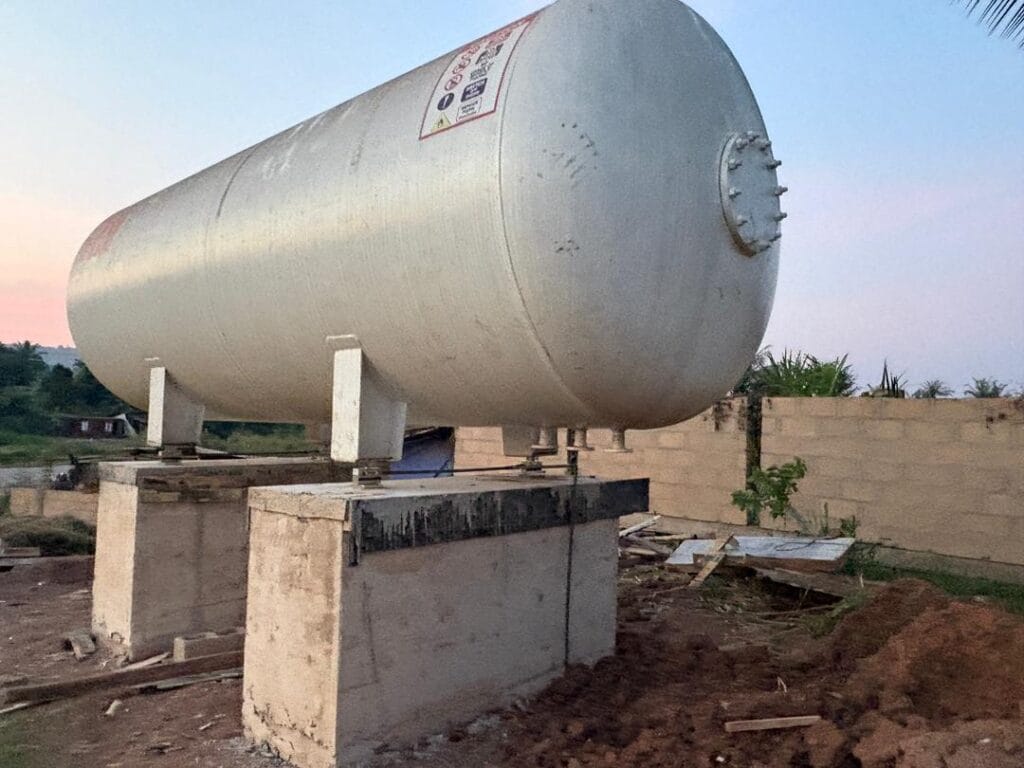
- Bullet Tanks: Horizontal cylindrical tanks ranging from 500kg to 10,000kg capacity
- Storage Spheres: For very large industrial applications, often exceeding 20,000kg
- Module Systems: Multiple interconnected tanks for facilities with high consumption rates
Specialized Applications
- Auto-gas Tanks: Designed for vehicles converted to run on LPG
- Marine Tanks: Built to withstand marine environments for boats and offshore applications
- Portable Camping Tanks: Small, lightweight tanks for outdoor and temporary use
Key Technical Specifications to Understand
When evaluating LPG tanks, several technical factors determine suitability, safety, and longevity. Understanding these specifications protects your investment and ensures regulatory compliance.
Capacity and Size Considerations
LPG tank capacity isn’t just about physical size—it’s about matching your actual consumption patterns. Nigerian households typically use 12.5kg cylinders that last 4-6 weeks for an average family of four. Restaurants might require 100kg tanks that need weekly refilling. The 80% fill rule is critical: tanks are never filled completely, allowing for safe gas expansion.
Material and Construction Quality
- Steel Cylinders: Most common, with varying thickness and corrosion resistance
- Composite Tanks: Newer technology using fiberglass, lighter but more expensive
- Coating and Protection: Epoxy powder coating, galvanization, or special paints for corrosion resistance
- Valve Types: Different safety valves for various applications and pressure requirements
Pressure Ratings and Safety Features
All tanks must display their working pressure (typically 17.5 bar for propane) and test pressure. Essential safety features include:
- Overfill Prevention Devices: Automatically stops filling at 80% capacity
- Pressure Relief Valves: Releases excess pressure during temperature spikes
- Excess Flow Valves: Cuts off gas flow if line rupture occurs
- Contents Gauges: Allows users to monitor remaining gas (not all tanks have these)
Safety Standards and Certifications in Nigeria {#safety-standards}
Safety is paramount when dealing with pressurized flammable gas. Nigeria has specific standards and certifications that legitimate tanks must meet.
SONCAP Certification
The Standards Organisation of Nigeria Conformity Assessment Programme (SONCAP) is mandatory for all LPG tanks imported or manufactured locally. This certification ensures products meet Nigerian Industrial Standards (NIS). Always verify SONCAP documentation before purchase—counterfeit certificates exist in the market.
Nigerian Industrial Standards (NIS)
Relevant standards include:
- NIS 69: Specification for welded steel cylinders for LPG
- NIS 319: Code of practice for safe handling and storage of LPG
- NIS 468: Specification for LPG cylinders up to 5kg capacity
International Standards
While Nigerian standards are primary, international certifications add credibility:
- ISO 22991: For cylinder design and manufacturing
- DOT (US Department of Transportation): For cylinders manufactured to US standards
- EN 1442: European standard for LPG cylinders
Regular Inspection Requirements
All LPG tanks require periodic recertification:
- Initial Test: Hydrostatic pressure test at manufacture
- 10-Year Recertification: Required for continued use
- Visual Inspections: Recommended every 2-3 years, especially in humid regions
- Valve Replacements: Typically every 5-10 years depending on usage
How to Calculate Your LPG Tank Size Needs
Selecting the right tank size prevents frequent refills while avoiding excessive capital expenditure. Here’s a detailed methodology for Nigerian conditions.
Household Consumption Calculation
A typical Nigerian household’s LPG needs depend on:
- Family size: More people equals more cooking
- Cooking habits: Frequency and duration of cooking sessions
- Appliance efficiency: Modern burners use less gas
- Alternative energy sources: If you also use electricity or kerosene
Example Calculation:
Average family of 4 uses approximately 0.75kg of LPG daily × 30 days = 22.5kg monthly. A 25kg cylinder provides comfortable margin with monthly refills.
Business/Industrial Consumption
For restaurants, bakeries, or industries:
- List all LPG appliances (ovens, fryers, boilers, heaters)
- Check burner ratings (typically in kg/hour or BTU/hour)
- Estimate daily operating hours for each appliance
- Calculate daily consumption: Burner rating × hours × number of appliances
- Add 20% margin for unexpected usage
Climate Considerations
Northern Nigeria’s higher temperatures increase tank pressure, requiring proper installation away from direct sunlight. Coastal regions need corrosion-resistant tanks due to salty air. Rainfall patterns affect delivery schedules—larger tanks provide buffer during rainy season disruptions.
Future-Proofing Your Purchase
Consider potential increased usage:
- Family expansion: More members joining household
- Business growth: Adding more equipment or extending operating hours
- Additional applications: Adding water heating or space heating
- Policy changes: Government incentives might make LPG cheaper for more applications
Where to Buy LPG Tanks in Nigeria
Navigating Nigeria’s LPG market requires knowing legitimate sources versus risky alternatives.
Why Your Choice of Vendor Matters More Than the Tank Itself
In the LPG industry, the quality of installation, maintenance, and ongoing support often matters more than the tank specifications. A premium tank installed incorrectly becomes a safety hazard. An affordable tank with proper maintenance outperforms an expensive one that’s neglected. This is where choosing the right vendor makes all the difference.
Your Trusted Partner: Mechatronix Energy Solutions
After extensive market evaluation and considering the critical factors of safety, reliability, and long-term support, Mechatronix Energy Solutions emerges as the recommended partner for your LPG tank needs. Here’s why they stand out in Nigeria’s competitive market:
Unmatched End-to-End Service Package
What sets Mechatronix apart isn’t just selling tanks—it’s their comprehensive approach:
- Expert Consultation & Needs Assessment
- Free site surveys across Nigeria
- Customized recommendations based on your specific usage patterns
- Future expansion planning built into every recommendation
- Transparent cost-benefit analysis
- Premium Quality Assurance
- All tanks SONCAP certified with verifiable documentation
- Direct partnerships with ISO-certified manufacturers
- 12-month comprehensive warranty on all equipment
- Quality inspections at every delivery
- Professional Installation by Certified Technicians
- NIPE-certified installation teams nationwide
- Compliance with all NIS and DPR regulations
- Proper site preparation and safety zoning
- Post-installation pressure testing and certification
- Ongoing Maintenance & Support
- Scheduled maintenance programs (quarterly, bi-annual, or annual)
- Emergency response teams in major cities (2-hour response in Lagos/Abuja/PH)
- Recertification services when required
- Free safety training for your staff or family
Their Product Range Specifically Designed for Nigerian Conditions
Mechatronix doesn’t just sell generic tanks—they provide solutions engineered for Nigeria:
For Residential Clients:
- SmartHome LPG Systems: With leak detection and automatic shutoff
- Coastal Series: Extra corrosion protection for Lagos, PH, Calabar
- Northern Series: Enhanced pressure management for high-temperature regions
For Commercial/Industrial Clients:
- BusinessPro Systems: Integrated tanks with remote monitoring
- Industrial Scalable Solutions: Modular systems that grow with your business
- Backup Integration: Systems that work with your existing generator setups
Safety-First Approach That Exceeds Standards
While meeting Nigerian standards is mandatory, Mechatronix exceeds them:
- Triple-Check Installation Protocol: Three technicians verify every installation
- Digital Documentation: Every tank gets a QR code linking to its full history
- Regular Compliance Updates: They notify you of regulatory changes affecting your system
- Insurance Liaison: They help interface with insurers for proper coverage
Transparent Pricing with No Hidden Costs
Unlike many vendors who quote low prices then add “extras,” Mechatronix provides:
- All-inclusive quotes covering tank, installation, certification, and first maintenance
- Flexible financing options through partner institutions
- Price protection guarantees against market fluctuations during your order period
- Loyalty discounts on refills through their partner network
The Mechatronix Purchase & Installation Process
When you choose Mechatronix, here’s what to expect:
- Initial Consultation (Free): Their engineer visits your site within 48 hours of inquiry
- Custom Proposal: Detailed specification, layout plan, and complete costing within 72 hours
- Regulatory Compliance Handling: They manage all necessary permits and notifications
- Scheduled Installation: At your convenience, with minimal disruption
- Handover & Training: Comprehensive walkthrough and safety training
- Follow-up: 7-day and 30-day check-ins to ensure satisfaction
- Ongoing Relationship: Included in their client maintenance program
Competitive Comparison: Why Mechatronix Wins
| Feature | Typical Vendor | Mechatronix |
|---|---|---|
| Installation Quality | Often subcontracted to uncertified technicians | NIPE-certified in-house teams |
| After-Sales Support | Limited or non-existent | 24/7 support with guaranteed response times |
| Compliance Updates | You’re on your own | Proactive notifications about regulatory changes |
| Maintenance Scheduling | You must remember and arrange | Automated reminders and scheduling |
| Emergency Response | Maybe next business day | 2-hour response in major cities |
| Documentation | Paper receipts easily lost | Digital portal with all documents |
| Training | Basic instructions | Comprehensive staff/family safety training |